
As a trusted supplier of 12V Starter - Delco PMDD, I've received numerous inquiries about the starting current surge of these starters. In this blog, I'll delve into the concept of starting current surge, explain why it occurs in 12V Starter - Delco PMDD, and discuss its implications.
Understanding Starting Current Surge
The starting current surge, also known as inrush current, is the high - magnitude current that a device draws for a short period when it is first switched on. In the context of a 12V Starter - Delco PMDD, this surge happens when the starter motor begins its operation to crank the engine.
When the ignition key is turned, the starter solenoid engages, and power is supplied to the starter motor. At this moment, the motor is at rest, and there is no back - electromotive force (back - EMF) generated. Back - EMF is a voltage that opposes the applied voltage in a motor and is proportional to the motor's speed. Since the motor is not rotating initially, the back - EMF is zero. According to Ohm's law (V = IR), with a fixed supply voltage (12V in this case) and a relatively low initial resistance in the motor windings, the current (I) can be extremely high.
Factors Affecting the Starting Current Surge in 12V Starter - Delco PMDD
- Motor Design: The design of the Delco PMDD starter motor plays a crucial role. Permanent Magnet DC (PMDC) motors, like the Delco PMDD, have a specific magnetic circuit and winding configuration. The number of turns in the armature windings, the cross - sectional area of the conductors, and the magnetic strength of the permanent magnets all influence the initial resistance and the overall electrical characteristics of the motor. A motor with fewer turns or a larger conductor cross - sectional area may have a lower initial resistance, resulting in a higher starting current surge.
- Load on the Starter: The load that the starter has to overcome when cranking the engine is another significant factor. If the engine is cold, the oil is more viscous, and the internal friction is higher. This increased load requires more torque from the starter motor. To generate this additional torque, the motor draws more current. Similarly, if there are mechanical issues in the engine, such as a seized bearing or a tight piston, the starter will face a higher load and draw a larger starting current.
- Battery Condition: The state of the battery supplying power to the starter also affects the starting current surge. A weak or discharged battery has a higher internal resistance. When the starter draws a large current, the voltage drop across the battery's internal resistance can be significant. This can lead to a lower voltage at the starter terminals, which in turn may cause the starter to draw even more current in an attempt to generate the required torque.
Measuring the Starting Current Surge
To measure the starting current surge of a 12V Starter - Delco PMDD, specialized equipment such as a high - current clamp meter or a data acquisition system with current sensors can be used. These tools can accurately capture the high - magnitude current spikes that occur during the starting process.
Typically, the starting current surge of a 12V Starter - Delco PMDD can range from several hundred amperes to over a thousand amperes, depending on the factors mentioned above. The surge usually lasts for a very short time, typically less than a second, as the motor starts to rotate and the back - EMF begins to build up, reducing the current draw.
Implications of the Starting Current Surge
- Battery Stress: The high starting current surge places a significant stress on the battery. Repeated high - current draws can lead to a faster depletion of the battery's charge and can also cause damage to the battery plates over time. This can reduce the battery's lifespan and performance.
- Electrical System Wear: The high current flowing through the electrical connections, cables, and the starter solenoid can cause excessive heating. Over time, this can lead to wear and tear of the electrical components, such as corrosion of the cable terminals and damage to the solenoid contacts.
- Starter Motor Life: Although the starter motor is designed to handle the starting current surge, continuous high - current operation can cause overheating of the motor windings. This can lead to insulation breakdown and eventually reduce the lifespan of the starter motor.
Managing the Starting Current Surge
- Proper Battery Selection: Choosing a battery with a high cold - cranking amp (CCA) rating is essential. A battery with a higher CCA can supply the large starting current without significant voltage drop, reducing the stress on both the battery and the starter.
- Regular Maintenance: Keeping the electrical system in good condition, including cleaning the battery terminals, checking the cable connections for tightness and corrosion, and ensuring proper lubrication of the engine, can help reduce the load on the starter and minimize the starting current surge.
- Starter Design Improvements: Manufacturers can design starters with features such as soft - start circuits or improved motor designs to reduce the initial current draw. These technologies can gradually ramp up the current to the motor, reducing the peak current surge.
Our 12V Starter - Delco PMDD Products
We are proud to offer a range of high - quality 12V Starter - Delco PMDD products. Our starters are designed with advanced technology to minimize the starting current surge while providing reliable starting performance.

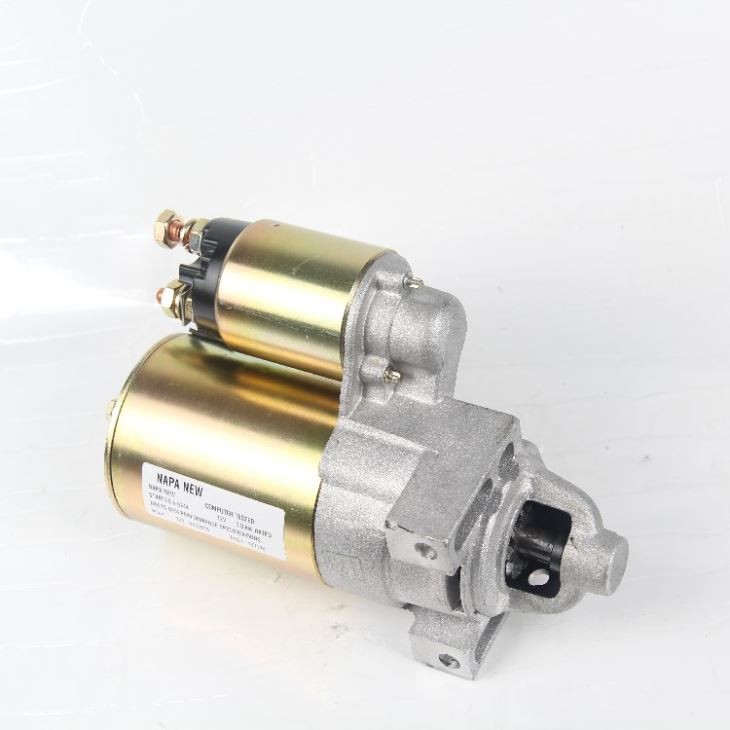
One of our popular products is the 10 - tooth Pinion Starter - Delco PMDD. This starter is engineered with precision to ensure a smooth and efficient starting process. It has been rigorously tested to meet the highest industry standards, providing our customers with peace of mind.
Contact Us for Procurement
If you are in the market for a reliable 12V Starter - Delco PMDD, we invite you to contact us for procurement. Our team of experts is ready to assist you in selecting the right starter for your specific needs. Whether you are an automotive repair shop, a distributor, or an original equipment manufacturer, we can provide you with the best solutions at competitive prices.
References
- Chapman, Stephen J. Electric Machinery Fundamentals. McGraw - Hill Education, 2012.
- Fitzgerald, A. E., Kingsley, C., & Umans, S. D. Electric Machinery. McGraw - Hill, 2003.
- Automotive Electrical and Electronic Systems, Third Edition, by William H. Crouse and Donald L. Anglin.