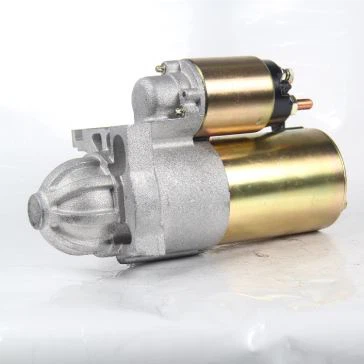

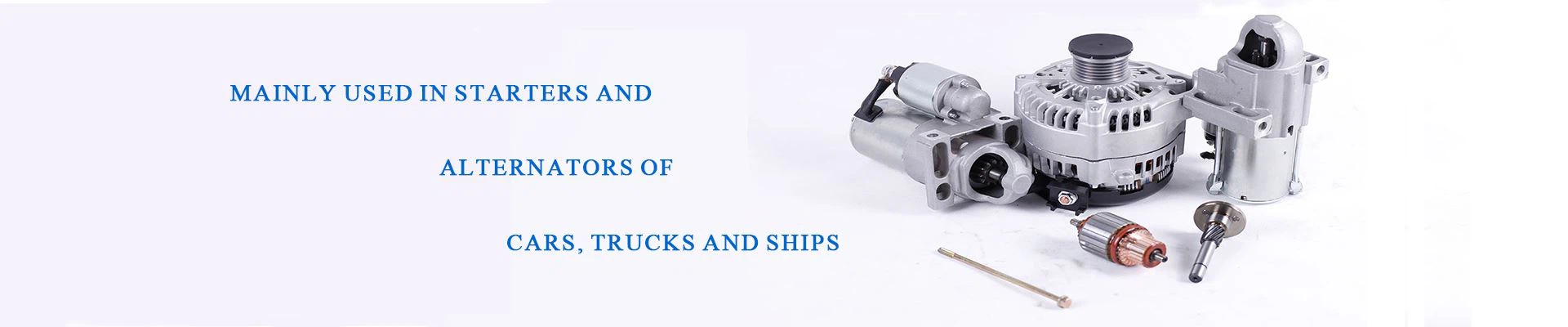
What is Starter-Delco PG-260L
The Starter-Delco PG-260L is a high-performance starter motor commonly used in automotive applications. It is designed and manufactured by Delco Remy, a leading supplier of starter motors and other electrical components for cars, trucks, and other vehicles. The PG-260L model is known for its durability, reliability, and high cranking power, making it a popular choice among mechanics and car enthusiasts. It features a planetary gear reduction system, sealed ball bearings, and a solenoid activated shift lever for smooth and efficient operation.
Advantages of Starter-Delco PG-260L
High Efficiency:The Starter-Delco PG-260L is highly efficient, offering a quick and reliable start every time.
Durable and Reliable:The PG-260L model is known for its durability and reliability, which ensures a longer lifespan for your vehicle's starter.
Easy to Install:The installation process for this model is streamlined and easier compared to other starters in the market.
Lower Maintenance Cost:With its high durability and reliability, the maintenance cost for your starter is significantly reduced.
Quieter Operation:The Starter-Delco PG-260L operates quietly and smoothly, making your driving experience more comfortable and undisturbed.
Fits a Variety of Vehicle Models:This starter is compatible with a wide range of car models, making it a practical choice for both individual car owners and auto repair shops.


Why choose us

01
Quality assurance
Excellent machinery and equipment companies prioritize quality in their products. They use high-quality materials and advanced manufacturing techniques to ensure that their equipment is durable, reliable, and efficient.

02
Wide range of products
Excellent machinery and equipment companies offer a wide range of products to cater to different industries and applications. This means you can easily find equipment that meets your specific needs.

03
Competitive pricing
Despite offering high-quality equipment, excellent machinery and equipment companies often offer competitive pricing. This means you get value for your money, and you can invest in durable equipment without breaking the bank.

04
Innovation
Excellent machinery and equipment companies are often at the forefront of technological innovation, offering state-of-the-art equipment that features advanced automation, digitalization, and safety features. This means you can stay ahead of the curve and benefit from the latest advancements in your industry.
What are the Applications of Starter-Delco PG-260L

Automotive Industry
It is used in various vehicles such as cars, trucks, buses, and other automobiles.

Industrial Applications
PG-260L starter motor is also used in industrial applications such as generators and compressors.

Marine Industry
It is used in boats and other marine applications.

Agricultural Industry
It is used in agricultural machinery like tractors and harvesters.

Construction Industry
It is used in construction equipment such as excavators and bulldozers.

Emergency power supply
It is also used as a backup power source in case of power outages.
Background Of Invention
The present invention relates to a reduction-type starter for an internal combustion engine, more particularly to a starter of the reduction-type having a motor shaft, an idle shaft and a pinion drive shaft, wherein a reduction of rotation is performed in this order and at two stages and wherein an over-running clutch is provided on the idle shaft.
Two kinds of reduction-type starters are known in the art, that is, a reduction-type starter wherein an over-running clutch is provided on a pinion drive shaft, and a starter wherein the over-running clutch is provided on a motor shaft.
It is therefore an object of the present invention to provide a reduction-type starter, wherein an over-running clutch is provided on an idle shaft reduced in its rotation to an intermediate value and a reduction of rotational speed is performed at two stages, so that a torque applied to the clutch is decreased to make the clutch smaller in size.
The rotational speed of the clutch can be selected at an intermediate value and modules of reduction gears can be designed in accordance with the respective reduction ratios.
Common Types of Starter
1
These use hydraulic pressure to turn the engine over and start it.
2
These use a spring-loaded mechanism to turn the engine over and start it.
3
These use a small turbine engine to turn the engine over and start it.
4
These are manual starters that require the user to turn a hand crank to start the engine.
Maintenance Tips for Starter
1.Keep it clean:Dirt and debris can accumulate on the outside of the starter, which can cause problems with its operation. Regularly cleaning it with a damp cloth can help to prevent these issues.
2.Tighten loose connections:Loose connections can cause the starter to malfunction, so it's important to check all electrical connections and tighten any that are loose.
3.Check the battery:A weak battery can put additional strain on the starter, so be sure to regularly check the battery and replace it if it's not holding a charge.
4.Lubricate moving parts:The moving parts of the starter need to be properly lubricated to prevent wear and tear. Use a high-quality lubricant to ensure that the starter operates smoothly.
5.Replace worn parts: Over time, parts of the starter may become worn and need to be replaced. Keeping an eye on the starter's performance and replacing any worn parts promptly can help to prevent further damage.
6.Avoid overusing the starter: Excessive use of the starter can cause it to fail prematurely. Avoid unnecessary start-ups and try to use the vehicle in a way that doesn't require constant starting and turning off of the engine.
7.Avoid prolonged cranking: If the engine is failing to crank, avoid holding down the starter for too long as it can cause a lot of heat buildup and damage the starter. Try turning it off and starting again after a few minutes.
8.Regular servicing:Regular servicing of the vehicle can alert you to any potential starter problems before they become serious. Follow the manufacturer's recommendations for maintenance schedules to ensure that your starter is always in good working order.

Our Factory
Our History
Our company established in 1996, is a starter, alternator and relative components specialist manufacturer.
Our firms
We have the registered capital 15 Million, and the factory area is 23000m2. There are 200 employees,including 32 engineers,6 R&D persons whose has Bachelor degree and above.
Our Product
Starter and alternator for Delco, bosch , Mitsubishi, Denso, valeo.
Product Application
Manufacturing Experience
We are professional manufacturer of Alternators, Starter Motors, and DC Motors. And have more than 15 years Manufactruring & export experience.
Development Capacity
We have developed over 1500 new units in the pass 15 years and are continuing to add new part numbers every month.
FAQ
Q: How do I know if my starter is getting enough power?
Q: How many clicks does a bad starter make?
Q: How long does a starter last?
Q: How do I know if my starter is bad or battery?
Q: Can you rebuild a starter?
Q: How do you diagnose a starter or solenoid?
Q: How much resistance should a starter have?
Q: How do you manually start a car with a bad starter?
Q: Why is my starter motor not engaging?
Q: Why is my starter not getting full power?
Q: How is the starter grounded?
Q: Why does my starter only work when I tap it?
Q: Will a dead starter click?
Q: What causes a starter motor to burn out?
Q: Is it better to replace or rebuild starter?
Q: How do I know if my starter solenoid is bad?
Q: How do you manually start a car with a bad starter?
Q: Why does a starter get stuck?
Q: What happens if you install a starter wrong?
Q: What is the biggest cause of starter motor failure?
Hot Tags: 1.6kw starter-delco pg-260l-factory, China, suppliers, manufacturers, factory, wholesale, buy, price, made in China, 12V Starter Delco PG 260L, 11 Tooth Pinion Starter Delco PG 260L, 1 6KW Starter Delco PG 260L