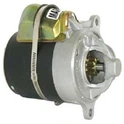

As a supplier of PMGR starters for Ford, I've been frequently asked whether these starters come with a self - diagnostic function. In this blog, I'll explore this topic in detail, drawing on my industry knowledge and experience.
Understanding PMGR Starters for Ford
PMGR (Permanent Magnet Gear Reduction) starters are an essential component in Ford vehicles. They are designed to efficiently crank the engine, leveraging the power of permanent magnets and a gear - reduction mechanism. This design offers several advantages, such as reduced size, lower weight, and improved efficiency compared to traditional starters.
Our company offers a range of PMGR starters for Ford, including the 12 Volt PMGR Starter for Ford, the 1.4KW PMGR Starter for Ford, and the 10 - tooth Pinion PMGR Starter for Ford. These starters are engineered to meet the specific requirements of different Ford models, ensuring optimal performance and reliability.
The Concept of Self - Diagnostic Function
A self - diagnostic function in a starter implies that the starter can monitor its own operating conditions and detect potential issues. This feature is highly desirable as it allows for early detection of problems, which can prevent more severe damage and reduce maintenance costs. In modern automotive systems, self - diagnostic functions are becoming increasingly common, enabling vehicles to communicate information about their components to the driver or a mechanic.
Does the PMGR Starter for Ford Have a Self - Diagnostic Function?
The answer to this question is not straightforward. In general, traditional PMGR starters for Ford do not have an inherent self - diagnostic function. These starters are relatively simple electromechanical devices that primarily serve the purpose of cranking the engine. Their main components include a motor, a solenoid, and a gear - reduction system, and they operate based on a basic electrical circuit.
However, with the advancement of automotive technology, some modern Ford vehicles are equipped with more sophisticated engine management systems that can indirectly monitor the performance of the starter. For example, the Engine Control Unit (ECU) in these vehicles can detect if the engine fails to start within a certain number of attempts or if there are abnormal electrical currents during the starting process. The ECU can then trigger a warning light on the dashboard to alert the driver of a potential problem.


But it's important to note that this is not the same as a true self - diagnostic function within the starter itself. The ECU is monitoring the overall starting process and the interaction between the starter and the engine, rather than the internal components of the starter.
The Advantages of a Self - Diagnostic Starter
If a PMGR starter for Ford were to have a self - diagnostic function, it would offer several significant advantages. Firstly, it would allow for more accurate and early detection of problems. For instance, it could detect issues such as a failing solenoid, a worn - out motor, or a malfunctioning gear - reduction system before they lead to a complete starter failure.
Secondly, a self - diagnostic starter could provide detailed diagnostic information. Instead of relying on general warning lights on the dashboard, mechanics could access specific error codes from the starter, which would make troubleshooting faster and more efficient. This would ultimately reduce the time and cost associated with repairs.
Finally, a self - diagnostic starter could enhance the overall reliability of the vehicle. By addressing problems early, it would prevent unexpected breakdowns and ensure that the vehicle remains in a safe and operational condition.
Challenges in Implementing Self - Diagnostic Function
Despite the potential benefits, there are several challenges in implementing a self - diagnostic function in PMGR starters for Ford. One of the main challenges is the cost. Adding sensors and diagnostic circuitry to the starter would increase its manufacturing cost, which could make it less competitive in the market.
Another challenge is the complexity of the design. PMGR starters are already compact and space - constrained, and adding additional components for self - diagnosis would require significant redesign. This could also affect the reliability of the starter, as more components mean more potential points of failure.
In addition, there are technical challenges in accurately diagnosing the internal components of the starter. The electrical and mechanical processes within the starter are complex, and developing sensors and algorithms to accurately detect faults is a difficult task.
Future Outlook
As automotive technology continues to evolve, it's possible that we may see PMGR starters for Ford with true self - diagnostic functions in the future. With the increasing demand for more reliable and efficient vehicles, manufacturers may be motivated to overcome the challenges and develop self - diagnostic starters.
Advancements in sensor technology and miniaturization may also make it more feasible to add diagnostic capabilities to starters without significantly increasing their size or cost. Additionally, the development of more intelligent vehicle systems may enable better integration between the starter and the overall vehicle diagnostic network.
Conclusion
In conclusion, currently, most PMGR starters for Ford do not have a true self - diagnostic function. However, modern Ford vehicles may have engine management systems that can indirectly monitor the starter's performance. While a self - diagnostic starter would offer many advantages, there are significant challenges in implementing this feature.
As a supplier of PMGR starters for Ford, we are committed to staying at the forefront of automotive technology. We continuously invest in research and development to improve the performance and reliability of our starters. If you are interested in our products or have any questions about PMGR starters for Ford, we encourage you to contact us for a detailed discussion and potential procurement opportunities.
References
- "Automotive Electrical Systems" by William H. Crouse and Donald L. Anglin
- Ford Motor Company Technical Manuals
- Industry reports on automotive starter technology trends